
Why Refrigerant Selection Decides AC Performance
Refrigerant is the working fluid of every automotive air conditioning system. It absorbs heat at the evaporator, releases it at the condenser and carries lubricating oil through the compressor loop. Choosing the wrong refrigerant does not simply reduce cooling capacity — it can raise discharge pressure, stress the compressor, damage seals and void the warranty on a vehicle that is still under service contract.
For workshops, distributors and fleet maintenance teams, refrigerant selection is therefore a specification decision, not a purchasing convenience.
The Main Refrigerant Families in Today's Aftermarket
R134a — The Established Standard
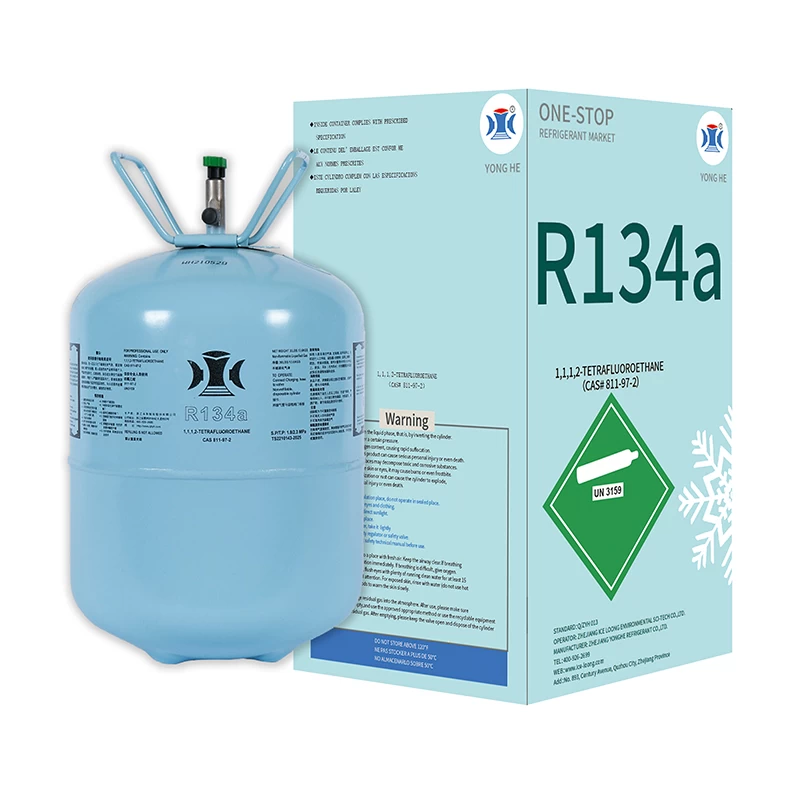
R134a (1,1,1,2-tetrafluoroethane) has been the dominant automotive refrigerant since the early 1990s and remains the reference fluid for the majority of vehicles on the road today. It operates at moderate pressures, is non-flammable and is compatible with PAG oil. If a vehicle was built between roughly 1994 and 2015, R134a is the default assumption until the under-hood label proves otherwise.
R1234yf — The Low-GWP Successor
R1234yf was introduced to meet global warming potential regulations in Europe and North America. Its GWP is a fraction of R134a, but it is mildly flammable (A2L) and requires dedicated equipment, different lubricants and separate service handling procedures. Systems designed for R1234yf use smaller charge weights and different component metallurgy.
R32, R410A, R404A, R407C, R507A and R290 — Blends and Industrial Fluids
Outside the passenger-car loop, a wider set of fluids appears in transport refrigeration, bus HVAC, workshop chillers and stationary cooling units:
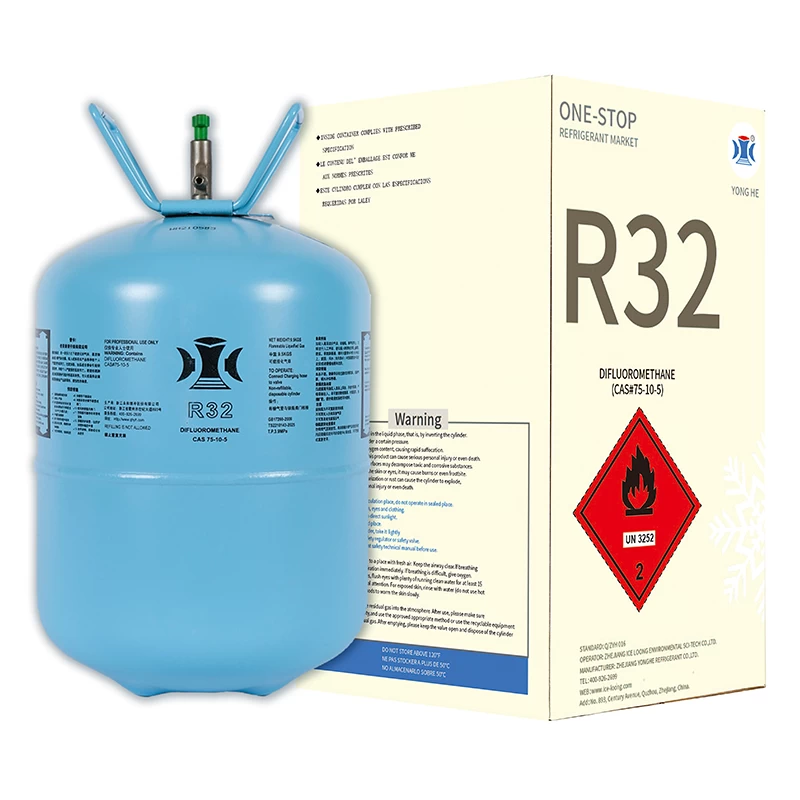
- R32 — high volumetric capacity, widely used in modern inverter-driven cooling systems; mildly flammable (A2L).
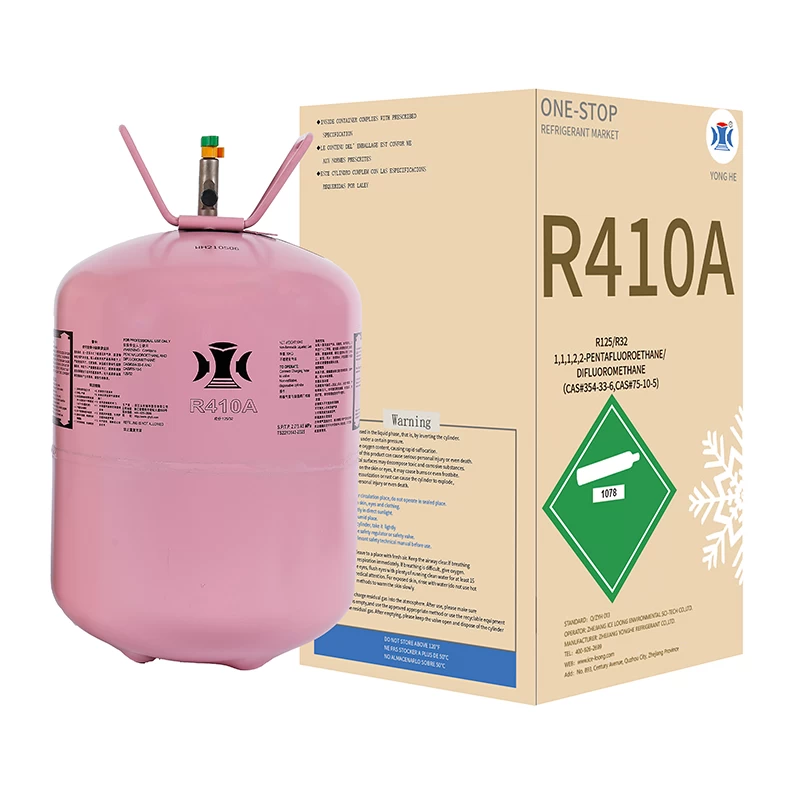
- R410A — a near-azeotropic blend with high pressure, common in stationary and transport AC equipment.
- R404A and R507A — low-temperature refrigeration blends for cold chain and transport freezer units.
- R407C — a zeotropic blend used as a retrofit fluid in some chiller and HVAC applications; requires liquid charging.
- R290 (propane) — excellent thermodynamic efficiency and very low GWP, but highly flammable (A3) and strictly regulated in charge size.
- R600a (isobutane) — a natural refrigerant used in small sealed cooling circuits and specialty applications.
A Practical Selection Checklist
- Read the under-hood label first. The OEM sticker states the factory charge and fluid type. It overrides every other assumption.
- Check the model year and market. North American and European vehicles from 2015 onward increasingly use R1234yf.
- Confirm the oil type. PAG oil is standard for R134a; POE and specific PAG grades are used with other fluids. Mixing oils causes sludge and compressor failure.
- Never top up with a different fluid. Blends and single-component fluids are not interchangeable. Cross-contamination degrades both the charge and the recovery equipment.
- Verify pressure ratings. R410A and R32 run at significantly higher pressures than R134a; hoses, gauges and recovery units must be rated accordingly.
- Match the application environment. Transport refrigeration and bus HVAC often specify low-temperature blends rather than passenger-car fluids.
Charge Weight and Purity Matter as Much as Type
Undercharging reduces cooling capacity and forces the compressor to cycle. Overcharging raises head pressure, increases power draw and can trip high-pressure cutouts. Refrigerant purity is equally important: recycled or poorly fractionated blends change composition during charging, which shifts evaporating temperature and oil return behaviour. Specifying certified-purity cylinders from a traceable supply chain protects both the repair and the reputation behind it.
How 6.0 Degree Supports Refrigerant Specification
Shaanxi 6.0 Degree car Air Conditioning Repair Co., Ltd. supplies a full refrigerant range under the Ice Dragon line — including R32, R134a, R290, R404A, R407C, R410A, R507A and R600a — together with the technical consultation needed to match fluid, oil and equipment. Each cylinder is supplied with clear identification, and we work with distributors and repair networks to build specification guides for their specific vehicle mix.
Key Takeaways
Refrigerant selection is driven by the under-hood label, the compressor oil and the pressure rating of the system — in that order. Understanding the difference between single-component fluids such as R134a and R32 and zeotropic blends such as R407C prevents the most expensive mistakes in air conditioning service. When specification is uncertain, consult the supplier before charging.