
Wear parts are the easiest category to buy badly. They sell fast, they are highly price-visible, and the cost of a quality mistake lands as a warranty claim or a lost account rather than as a failed part on a shelf. This FAQ addresses what distributors and parts retailers ask when building or tightening a brake, lighting and wear-parts programme.
About us: Shaanxi 6.0 Degree car Air Conditioning Repair Co., Ltd. (6.0 Degrees) supplies automotive core systems and wear parts across air conditioning, pipeline, brake and lighting categories, serving workshops, retail chains and distributors.
In this article
- Why do wear parts deserve a separate sourcing standard?
- How do I match brake pads correctly?
- How do I match discs, drums and rotors?
- What matters when sourcing automotive lighting?
- How do I screen a wear-parts supplier?
- How do I decide what to stock and in what depth?
- How do I reduce warranty claims and returns?
- What documentation should accompany the goods?
- How do I structure a supplier programme?
Why do wear parts deserve a separate sourcing standard?
Wear parts behave differently from the rest of the catalogue, and treating them with a general sourcing policy is where most of the avoidable cost sits.
| Characteristic | Sourcing implication |
|---|---|
| Consumed on a schedule | Demand is predictable by vehicle population, which means stock-outs are self-inflicted rather than unlucky |
| Safety-critical | A quality failure is not just a return — it is a liability exposure and, in most markets, a regulatory one |
| Price-transparent | Customers compare these lines most aggressively, so price alone cannot be the differentiator |
| Application-sensitive | A brake pad that is dimensionally close but frictionally wrong causes noise, dust and complaint rates that follow the brand |
| Fast-moving | Working capital cycles quickly, which makes over-stocking just as damaging as under-stocking |
The hidden cost is the return, not the part. A wear-part return consumes labour for diagnosis, handling and restocking, plus the customer relationship. On these lines, buying on unit price alone reliably produces a higher total cost than buying on supply reliability and documented quality.
How do I match brake pads correctly?
Brake pads are matched on more than physical dimensions. Two pads can fit the same caliper and behave completely differently, and the difference shows up as noise, dust or pedal feel complaints rather than as a failure.
| # | Dimension | Why it matters |
|---|---|---|
| 1 | OE part number and application list | The authoritative reference. Model-and-year catalogues produce a real error rate because manufacturers change pads within a model year |
| 2 | Backing plate dimensions and abutment geometry | Determines whether the pad sits correctly and moves freely in the caliper bracket |
| 3 | Friction material formulation | Determines coefficient of friction, temperature behaviour, noise characteristics and dust. Ceramic, semi-metallic and organic formulations are not interchangeable in behaviour |
| 4 | Friction coefficient rating | A pad rated outside the vehicle specification changes braking balance between axles, which affects stability under heavy braking |
| 5 | Pad thickness and chamfer / slot geometry | Affects service life expectation and noise performance |
| 6 | Shim, clip and hardware supplied | Pads supplied without the correct shim and anti-rattle hardware generate noise complaints that are attributed to the pad |
| 7 | Wear sensor provision | Pads for vehicles with wear indicators must provide the correct sensor interface or the warning system is defeated |
Friction formulation is the differentiator on these lines. A distributor who can explain the formulation offered — and match it to the vehicle's intended duty cycle and the customer's complaint history — competes on something other than price.
How do I match discs, drums and rotors?
Rotating brake components are matched on a smaller number of dimensions, but the tolerances are tighter and the consequences of mismatch are more immediate.
| # | Dimension | Why it matters |
|---|---|---|
| 1 | Diameter and thickness | Must match the caliper and pad envelope. Thickness outside specification changes pad wear and can prevent correct retraction |
| 2 | Minimum thickness marking | A disc supplied without a clear minimum thickness marking cannot be assessed at service, which is a genuine liability issue |
| 3 | Hat or hub height and offset | Determines whether the disc sits in the correct plane relative to the caliper. Errors cause uneven pad contact |
| 4 | Bolt pattern and centre bore | Must match the hub exactly. A disc that fits loosely will not run true |
| 5 | Ventilation type | Solid, internally vented or cross-drilled. Substituting a different type changes thermal behaviour |
| 6 | Surface finish and run-out | Out-of-tolerance run-out produces the judder that customers report as warping |
| 7 | Coating | Coated discs resist corrosion on the non-swept areas, which matters in markets with road salt |
The single most useful quality question to ask a disc supplier is whether the product carries a documented minimum thickness marking and a surface run-out specification. Suppliers who can answer both numbers are working to a standard rather than to a price.
What matters when sourcing automotive lighting?
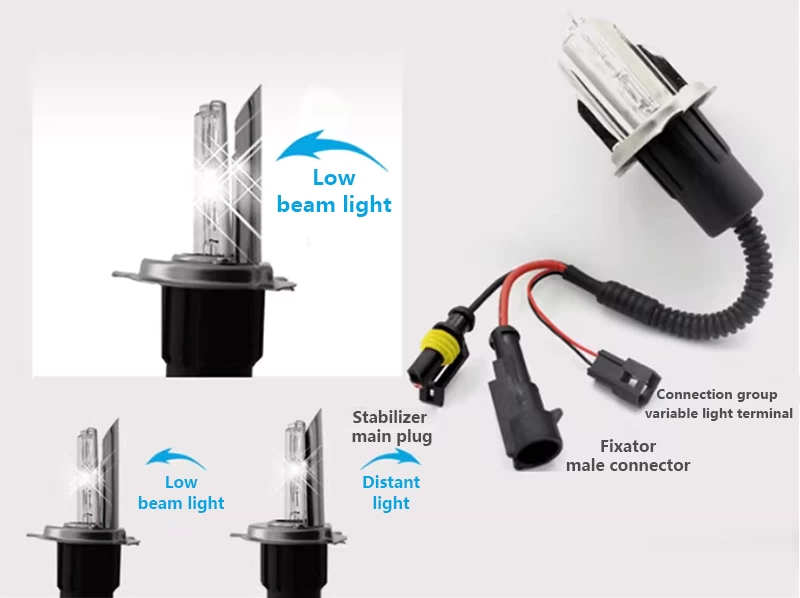
Lighting has a technical dimension that most wear-parts categories do not: a product can fit, function, and still be legally problematic or actively unsafe for other road users.
| Consideration | What to confirm before listing |
|---|---|
| Beam pattern and cut-off | A substitute bulb or lamp unit that does not reproduce the original beam cut-off scatters light and dazzles oncoming traffic. Beam accuracy is the difference between an upgrade and a hazard |
| Colour temperature and output | Extremely high colour temperature appears brighter to the driver while providing worse visibility in poor weather. Output claims should be verifiable, not just advertised |
| Lumen output versus wattage | Many markets regulate output and the use of high-output replacements in lamp units not designed for them. Confirm what is permitted where you sell |
| Canbus compatibility | LED replacements frequently require error-free or canbus-compatible design. Units that trigger bulb-failure warnings generate returns |
| Heat management | LED and laser systems generate heat at the emitter. Inadequate cooling shortens life and can damage the lamp housing |
| Service life claim | A stated life figure with a defined test basis is more useful than a marketing number |
| Water and dust sealing | Sealing determines real-world life on a vehicle, particularly in wet or dusty markets |
| Regulatory marking | Products should carry the marking required by the destination market |
Fit is the easy part; beam pattern is the hard part. For any lighting upgrade, the questions worth asking are how the beam cut-off is reproduced and whether the solution is legal in the destination market. Getting this wrong creates a product that satisfies the buyer and endangers other drivers.
How do I screen a wear-parts supplier?
Price is easy to compare and quality is not, which is exactly why a structured evaluation matters. The following questions produce answers that can be verified rather than asserted.
| # | Question | What a good answer looks like |
|---|---|---|
| 1 | Is the application list keyed to OE numbers? | Yes, with catalogue data that can be cross-checked against a known reference |
| 2 | Which standards does the product conform to? | Specific standard references with documentation, not general claims of quality |
| 3 | What is the warranty period and what does it exclude? | A stated period with written terms, including a clear position on installation-related claims |
| 4 | Is there batch traceability on the product? | A lot code that links to a production record, so a claim can be investigated rather than disputed |
| 5 | Can you supply test or inspection documentation? | Yes — material certificates, dimensional reports or test summaries on request |
| 6 | How consistent is the packaging and marking? | Correct application marking and packaging protection. Poor marking causes the mis-picks that become returns |
| 7 | What is the reorder lead time and minimum order? | Stated lead times and a minimum that allows sensible stock depth rather than forcing over-buying |
Request a sample order before committing volume. A sample order tests the two things a datasheet cannot: whether the parts actually fit the stated applications, and whether the supplier's packaging and documentation survive contact with your warehouse.
How do I decide what to stock and in what depth?
Wear-parts inventory is a coverage problem, not a volume problem. The goal is to cover the vehicles your customers actually service, in enough depth to fill an order, without holding capital in applications that will not move.
| Principle | How to apply it |
|---|---|
| Cover applications, then depths | List the vehicle applications your customer base services, then stock the minimum viable quantity of each before deepening any single line |
| Segment by turnover, not by price | Fast-moving lines earn a deeper stock position than slow lines with a higher margin. Depth follows consumption rate |
| Set reorder points from real data | Use actual consumption and lead time. A reorder point based on lead time plus safety stock is more reliable than a round number |
| Stock the consumables with the parts | Shims, clips, hardware, sensors and seals. A brake job interrupted for a missing clip is the fastest route to a lost account |
| Hold depth in the top applications only | Concentrate depth where demand is dense, and accept a slightly longer lead time elsewhere |
| Review obsolescence on a schedule | Vehicle populations shift. A line that moved well two years ago may now be dead stock |
| Coordinate with the supplier on range | A supplier who knows your customer profile can advise on which applications drive volume |
Breadth first, depth second. A distributor who can supply the right part for most vehicles on the first call earns the account. A distributor with deep stock in half the applications and nothing for the rest sends the customer to a competitor for the other half.
How do I reduce warranty claims and returns?
Most wear-part returns are preventable, and they fall into a small number of recurring causes. Addressing them at the point of sale is far cheaper than processing them afterwards.
| Cause | Prevention |
|---|---|
| Wrong application supplied | Catalogue data keyed to OE number, plus clear application marking on packaging so a mis-pick is caught before dispatch |
| Missing installation hardware | Supply the shim, clip and fitting kit with the pad. Omitting them invites a noise complaint and a return |
| Noise or judder complaint | Match friction formulation to the vehicle and to the duty cycle the customer actually operates. Supply the hardware and follow the bedding-in procedure |
| Fitting error attributed to the part | Include fitting guidance and specify the necessary companion parts — disc replacement alongside pads where measurement requires it |
| Warranty claim without evidence | Record batch codes at the point of sale so a claim can be traced back to a production record |
| Repeat failure on the same vehicle | Treat as a fault-finding issue rather than a parts issue. Repeat failures usually indicate a hydraulic, caliper or fitting problem |
The practical rule: sell the complete job, not the single part. Pads without hardware, or discs without the measurement conversation, is where most avoidable claims begin.
What documentation should accompany the goods?
| Document | Purpose |
|---|---|
| Application list keyed to OE references | Allows your counter staff and catalogue to match the part reliably |
| Standards conformity statement | Supports safety-critical claims and helps satisfy market requirements |
| Batch or lot marking on the product | Enables traceability when a claim is raised |
| Packaging with clear application marking | Reduces mis-picks in the warehouse and at the counter |
| Installation and bedding-in guidance | Reduces noise complaints and repeat visits |
| Minimum thickness and specification data (discs) | Allows correct assessment at service — a genuine liability consideration |
| Consolidated shipping documentation | Avoids clearance delays and mismatch between order, invoice and goods |
Documentation is not administrative overhead. On safety-critical lines it is the difference between being able to defend a product and having no position at all when a claim arrives.
How do I structure a supplier programme?
The strongest programmes combine category breadth with a single accountable contact, so that a distributor is not managing five relationships to cover four related categories.
| Element | What to establish |
|---|---|
| Category coverage | A supplier able to cover brake, lighting and wear parts reduces administrative load and improves fill rate on mixed orders |
| Application list agreed up front | A defined range for your market, rather than an open catalogue |
| Stocking agreement | Agreed depths for the top applications, with a stated reorder lead time |
| Warranty terms in writing | Period, exclusions and the claims process, agreed before the first volume order |
| Consumables availability | Hardware, seals and fittings available in the same order as the parts |
| Technical support | A contact who can answer fitment and formulation questions rather than only commercial ones |
| Review rhythm | A scheduled review of consumption, obsolescence and application coverage |
Related reading in this series
Building a brake, lighting or wear-parts range?
We supply brake system components, lighting and wear parts alongside air conditioning and pipeline categories, with application data keyed to OE references and consumables available in the same order. Tell us which vehicle ranges you cover.
This FAQ addresses sourcing questions from distributors and parts retailers. For safety-critical components, always confirm the application against the vehicle's OE reference and comply with the regulatory requirements of your market.